Palantir Technologies has formed a strategic partnership with Ondas and World View to develop an…
Boeing and RAAF Validate MQ-28 Ghost Bat’s Combat Readiness in Accelerated Demonstration Campaign
Boeing and the Royal Australian Air Force (RAAF) have completed a series of rigorous demonstrations proving the operational effectiveness of the MQ-28 Ghost Bat, a next-generation Collaborative Combat Aircraft (CCA) designed to augment crewed platforms with autonomous capabilities. The tests, finalized four months ahead of schedule, mark a significant milestone in the evolution of uncrewed air combat systems and their integration into allied force structures.
Autonomous Systems Take Flight in Real-World Scenarios
The MQ-28, developed under Boeing’s global defense portfolio, executed a range of missions aligned with RAAF’s operational requirements. These included autonomous behaviors, multi-ship coordination, deployment operations from RAAF Base Tindal, and teaming with the E-7A Wedgetail airborne early warning and control aircraft. The demonstrations also validated data fusion between multiple MQ-28 units and transmission to crewed platforms, key capabilities for future distributed air combat networks.
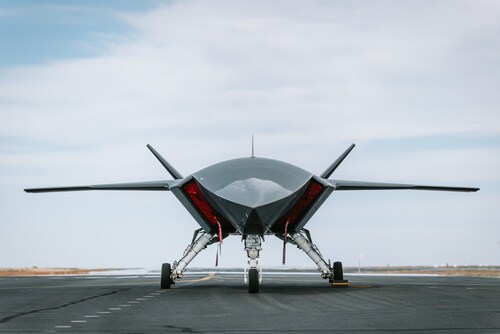
With over 150 hours of live flight testing and more than 20,000 hours of virtual simulation completed, the MQ-28 has proven its ability to perform the “find, fix, track, and target” phases of the air combat chain. Boeing’s program director Glen Ferguson noted that the early completion of these tasks allows the team to accelerate development into the “engage and assess” phases, including a planned air-to-air weapon test later this year or in early 2026.
Strategic Implications for Allied Aerospace Forces
The MQ-28 Ghost Bat represents a shift in how air forces conceptualize combat mass and survivability. By deploying autonomous aircraft alongside crewed fighters, militaries can extend sensor reach, reduce risk to pilots, and increase tactical flexibility. The platform’s modular design and AI-driven autonomy make it a strong candidate for integration into both U.S. and allied air forces seeking to modernize their force mix.
For aerospace stakeholders in regions like Colorado Springs, where defense innovation and unmanned systems development are core to local industry, the MQ-28’s progress offers a glimpse into future procurement and R&D priorities. Companies involved in autonomy, sensor fusion, and mission systems integration may find new opportunities as CCAs move closer to operational deployment.
Block 2 Production and Future Force Integration
The capabilities validated in 2025 will be incorporated into the Block 2 MQ-28 aircraft now in production. These upgrades form the foundation for initial operational capability within the RAAF and potentially other allied partners. As Boeing continues to refine the platform, the Ghost Bat is poised to become a cornerstone of collaborative air combat strategy.

Related Posts