AeroVironment has acquired Empirical Systems Aerospace, expanding its manufacturing capacity for electric propulsion, unmanned aircraft…
CIRCOR Appoints Saif Siddiqui as CEO, Signals Strategic Continuity and Operational Acceleration
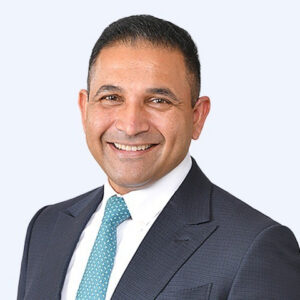
CIRCOR International has appointed Saif Siddiqui as Chief Executive Officer, effective January 26, 2026, marking a leadership transition designed to support the company’s long‑term growth across its industrial, naval, and aerospace markets. Siddiqui succeeds Tony Najjar, who has moved into the role of Vice Chairman of the Board of Directors after leading the company through several years of operational and cultural transformation.
For aerospace readers, the announcement underscores CIRCOR’s continued focus on strengthening its position as a supplier of mission‑critical flow control technologies used across a wide range of aircraft, propulsion, and defense systems.
Leadership Transition Focused on Strategic Continuity
CIRCOR’s Board emphasized that the leadership change reflects a planned evolution rather than a shift in direction. The company’s strategy remains consistent, with an emphasis on disciplined execution, operational excellence, and long‑term value creation.
Board Chair Dan Daniel noted that Siddiqui brings the type of global operating experience and customer‑centric leadership that aligns with CIRCOR’s next phase of development. He also highlighted Najjar’s contributions, including cultural initiatives and performance improvements that strengthened the company’s foundation.
For aerospace manufacturers and defense contractors, the continuity message is notable. CIRCOR’s components and subsystems support critical applications, and stable leadership is often viewed as a positive indicator for supply chain reliability.
Najjar’s Tenure and Ongoing Role
Tony Najjar, who served as CEO since 2022 and has been with CIRCOR since 2015, reflected on the company’s progress during his tenure. He pointed to the decision to make all 3,500 employees owners in the company’s success as a defining achievement, noting the impact on engagement and performance.
Najjar’s background includes senior roles in aerospace and defense at Rockwell Collins and Kaiser Aerospace, experience that shaped his leadership of CIRCOR’s Aerospace and Defense Group earlier in his career with the company. His continued involvement as Vice Chairman provides governance continuity and preserves institutional knowledge that is relevant to customers in regulated and mission‑critical markets.
Siddiqui Brings Global Industrial and Operational Expertise
Siddiqui joins CIRCOR with extensive experience leading complex industrial businesses. His most recent role as Chief Strategy Officer at Carrier Global Corporation involved shaping enterprise‑level growth and transformation initiatives. Prior to that, he led Carrier’s Asia Pacific HVAC business, a multi‑billion‑dollar operation based in Tokyo and Singapore, and held global leadership roles in commercial fire and controls.
His background includes P&L leadership, portfolio transformation, and operational turnarounds across mature and emerging markets. These capabilities align with CIRCOR’s ongoing efforts to strengthen performance, expand in high‑growth regions, and enhance customer support across aerospace, defense, and industrial sectors.
Siddiqui emphasized the company’s strengths in engineering, customer relationships, and global reach, noting that these attributes position CIRCOR well for continued growth. He also highlighted the importance of maintaining a culture of ownership and performance, themes that resonate with aerospace customers who rely on consistent quality and delivery.
Board Perspective on the Next Phase of Growth
KKR Partner Josh Weisenbeck described Siddiqui as a leader with deep operating expertise and a strong customer‑centric mindset. His comments reflect the Board’s expectation that CIRCOR will continue to build on recent progress while accelerating execution in key markets.
For aerospace industry readers, this focus on disciplined growth and operational rigor is particularly relevant. Flow control components and subsystems play essential roles in aircraft fuel, hydraulic, and environmental systems, and suppliers with strong operational foundations are increasingly valued as OEMs and Tier 1 integrators work to stabilize global supply chains.
Background on Saif Siddiqui
Siddiqui’s career spans enterprise strategy, general management, and portfolio transformation across global industrial and building systems businesses. He has led turnarounds, acquisitions, and divestitures, and has managed performance across both high‑growth and mature markets. He began his career in India in commercial leadership roles and later earned an MBA from Yale University and a Bachelor of Engineering from the National Institute of Technology in India.
His experience leading geographically diverse teams and complex product portfolios aligns with CIRCOR’s global footprint and its mix of aerospace, defense, and industrial customers.
Background on Tony Najjar
Najjar served as CIRCOR’s President and CEO from August 2022 through January 2026. Prior to that, he held roles including Chief Operating Officer, acting CEO, President of the Aerospace and Defense Group, and Vice President positions in sales, marketing, and operations. His earlier career at Rockwell Collins and Kaiser Aerospace included leadership in business development, programs, engineering, and M&A.
His engineering background and aerospace experience contributed to CIRCOR’s efforts to strengthen performance in mission‑critical flow control markets.
CIRCOR’s Position in Aerospace and Defense
Founded in 1999, CIRCOR designs and manufactures flow control products and subsystems for aerospace, defense, and industrial applications. Its portfolio includes recognized brands such as Allweiler, Imo, Hale Hamilton, Aerodyne Controls, and CIRCOR Aerospace. The company serves more than 14,000 customers in approximately 100 countries and employs about 3,500 people worldwide.
For aerospace readers, CIRCOR’s technologies support a range of aircraft and defense platforms, including fuel handling, hydraulic control, and environmental systems. The leadership transition is positioned to support continued investment in these capabilities and to strengthen the company’s role as a supplier to OEMs, Tier 1 integrators, and defense organizations.

Related Posts