Planet Labs has successfully launched three additional Pelican high resolution imaging satellites aboard the CAS500…
ServiceNow Launches Autonomous Security and Risk Platform for AI Driven Environments
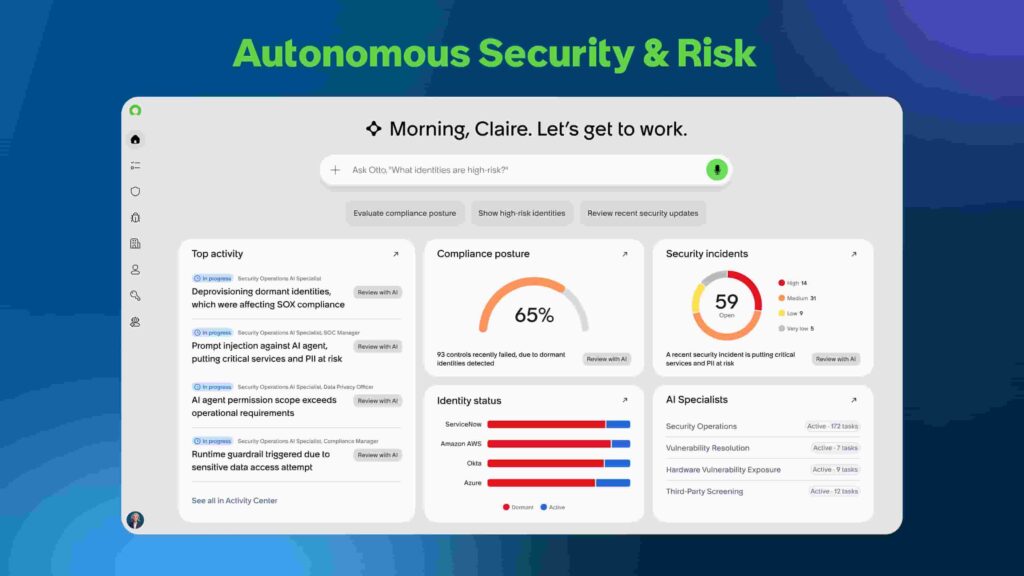
ServiceNow has introduced Autonomous Security and Risk, a new platform designed to govern AI agents, identities, and connected assets across complex enterprise environments. The announcement was made at the company’s annual Knowledge 2026 event and reflects growing demand for unified security architectures capable of operating at machine speed. For aerospace and defense organizations, the platform addresses a critical challenge as AI driven systems proliferate across engineering, operations, and mission support functions.
Integrated Identity and Asset Governance for High Assurance Operations
The platform integrates capabilities from Armis and Veza to provide continuous visibility into both assets and permissions. Armis contributes real time intelligence across IT, operational technology, IoT, and connected devices, while Veza adds fine grained identity and permission governance for human and non human actors.
This combination is intended to close long standing visibility gaps that complicate risk management in aerospace and defense environments, where fleets of connected systems, digital twins, autonomous agents, and classified networks must be monitored with precision. The platform maps every identity, permission, and asset into a single operational graph, enabling prevention, detection, and response workflows to run at machine speed.
Addressing the Rapid Growth of AI Agents in Enterprise Systems
ServiceNow emphasized that AI agents now outnumber human identities in many organizations and often operate with permissions originally designed for human users. The platform provides continuous oversight of these agents, ensuring that access is governed, least privilege is enforced, and actions are traceable.
For aerospace manufacturers and defense contractors deploying AI for predictive maintenance, supply chain automation, engineering analysis, and mission support, the ability to govern non human identities is becoming essential to maintaining compliance and protecting sensitive systems.
Real Time Asset Intelligence for Complex Operational Environments
Armis integration brings real time monitoring of connected assets, including devices and systems that traditional tools cannot easily detect. This capability is particularly relevant for aerospace and defense operators managing mixed environments that span legacy equipment, modern digital infrastructure, and operational technology.
Asset intelligence flows directly into the ServiceNow configuration management database, transforming it from a static inventory into a live representation of the operational attack surface. When vulnerabilities or anomalies are detected, the platform initiates automated response actions based on contextual risk.
Framework for Trusted AI and Autonomous Response
Autonomous Security and Risk is designed to provide the governance foundation required for trusted AI adoption. The platform combines asset intelligence, identity governance, risk management, and workflow automation into a unified system. ServiceNow’s AI Control Tower evaluates AI agents continuously, scores their risk, and enforces least privilege in real time.
Two new AI specialists introduced by ServiceNow autonomously resolve vulnerabilities and investigate security incidents, working alongside human teams. The company reports that its own security operations have accelerated significantly using these capabilities.
Relevance for Aerospace and Defense Organizations
Aerospace and defense enterprises face increasing pressure to secure expanding digital ecosystems that include AI enabled engineering tools, autonomous systems, connected manufacturing equipment, and global supply chain networks. The ability to maintain continuous visibility and enforce governed access across these environments is becoming a core requirement for compliance, mission assurance, and operational resilience.
ServiceNow’s new platform positions itself as a unified approach to managing these challenges, offering a single view of exposure, identity decisions, and enterprise risk posture.

Related Posts