
A wave of capital is moving into defense technologies that sit at the intersection of…
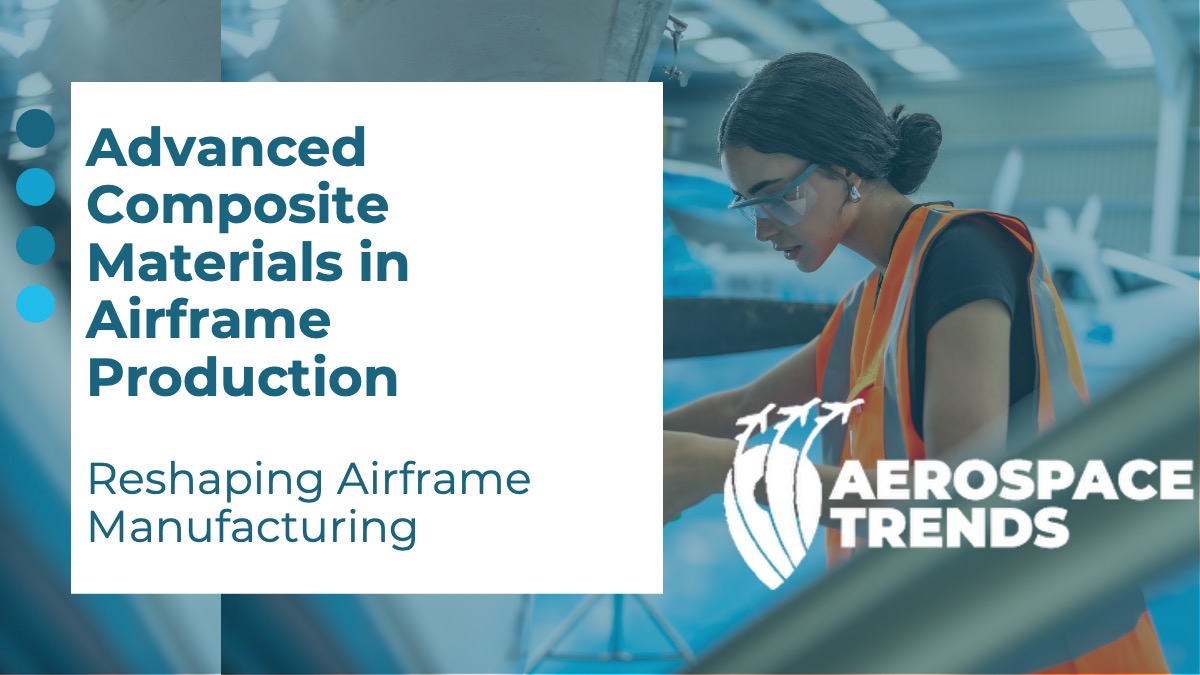
Advanced Composite Materials in Airframe Production
Advanced composite materials have become a cornerstone of modern airframe production. As aerospace manufacturing executives face mounting pressure to reduce weight, improve fuel efficiency, and maintain strict safety margins, next‐generation composites offer a pathway to significant performance gains. This feature article examines emerging carbon‐fiber variants, ceramic‐matrix composites, and innovative hybrid material systems. It highlights key lightweighting benefits, durability considerations, and the cost trade-offs that must be managed during scale-up and deployment.
Airframe production refers to the design, fabrication, assembly, and testing of the structural components that form an aircraft’s “skeleton.” The airframe encompasses everything apart from the propulsion system (engines), avionics, and onboard systems. Its primary elements include the fuselage (body), wings, empennage (tail assembly), landing gear attachments, and control surfaces (ailerons, rudders, elevators).
Examples of airframe production activities and components:
Fuselage manufacturing
- Stretching and bonding composite skins to frames and stringers
- Automated fiber-placement or tape-layup for advanced carbon-fiber sections
- Riveting and panel installation on aluminum-alloy frames
Wing assembly
- Layup and curing of composite skins on upper and lower wing panels
- Installation of internal spars, ribs, and fuel tanks
- Integration of leading-edge slats and trailing-edge flaps
Tail and control surfaces
- Fabrication of stabilizer and elevator assemblies using honeycomb cores and composite facings
- Balancing and hinge-point installation for precise control movements
Landing-gear attachment and belly fairings
- Machining of high-strength steel or titanium fittings
- Bonding composite fairing panels for drag reduction
Structural testing and quality inspection
- Static load tests to verify ultimate strength and fatigue life
- Non-destructive inspection methods (ultrasonic, radiographic, thermography) to detect subsurface defects
Major aerospace manufacturers, such as Boeing, Airbus, Lockheed Martin, and Bombardier, operate dedicated airframe production lines where these processes are carried out on scales ranging from a few airframes per month to several dozen. Specialized suppliers may produce large subassemblies, like wing boxes or fuselage barrels, for integration into final assembly plants.
Next-Generation Carbon-Fiber Composites
Carbon-fiber reinforced polymers (CFRP) have long been celebrated for their high strength-to-weight ratio. Recent developments focus on:
• Ultra-high modulus fibers
• Tailored fiber architectures
• Advanced resin chemistries
These improvements enable thinner skins, more complex geometries, and enhanced damage tolerance. Manufacturers can expect 5 to 10 percent further weight reduction compared with legacy CFRP, while preserving tensile strength and stiffness.
Ceramic-Matrix Composites
Ceramic-matrix composites (CMC) bring exceptional thermal stability to high-temperature airframe applications. Key features include:
• Operating temperatures above 1,200 °C
• Excellent oxidation resistance
• Dimensional stability under thermal cycling
In practice, CMC components are finding a home in leading edges, engine nacelle liners, and exhaust systems. The ability to replace heavier nickel-based alloys with lighter CMC panels can yield single-digit percentage weight savings in critical zones.
Hybrid Composite Systems
Hybrid composites combine multiple fiber and matrix types to optimize performance for specific loading scenarios. Common approaches include:
• Carbon-fiber plus glass-fiber hybrids for impact resistance
• Carbon-fiber plus aramid hybrids for enhanced damage tolerance
• Ceramic and carbon combinations in sandwich panels
By strategically layering materials, manufacturers can tailor properties such as toughness, strain-to-failure, and fatigue life. Hybrid systems can also reduce laminate thickness, driving down both structural mass and part count.
Lightweighting Gains
The primary motivation for adopting advanced composites is weight reduction. Key performance improvements include:
• 15 to 20 percent lower structural mass vs. aluminium alloys
• 5 to 10 percent further mass savings compared to earlier CFRP
• Integrated multifunctionality (for example, embedded sensors or electrical pathways)
Reducing airframe weight translates directly into lower fuel burn, extended range, and reduced emissions. For airline operators, this can mean millions of dollars in annual savings across a fleet.
Durability Impacts
Long-term durability is essential for certification and in-service reliability. Advanced composites must meet rigorous standards in:
• Impact resistance and damage tolerance
• Fatigue performance under variable loading
• Environmental aging (moisture, UV exposure, salt spray)
Emerging resin systems and novel fiber coatings improve resistance to moisture ingress and UV degradation. In addition, improved non-destructive inspection techniques, such as phased-array ultrasonic testing, help detect subsurface damage before it propagates.
Cost Trade-Offs
While advanced composites deliver clear performance advantages, they come with cost considerations:
• Raw material prices for high-modulus fibers and specialty ceramics are higher than standard CFRP or metallic alloys
• Complex manufacturing processes (autoclave curing, six-axis fiber placement) require significant capital investment
• Extended cycle times and specialized labor can impact throughput
Successful deployment relies on volume scaling, process automation, and supply chain partnerships. Executives must balance the up-front investment against lifecycle savings in fuel, maintenance, and part replacement.
Path to Production Readiness
Transitioning from prototypes to full production involves several key steps:
- Material qualification and certification per aerospace standards
- Tooling development for automated fiber placement or out‐of‐autoclave curing
- Supply chain alignment for raw materials and subcomponents
- Workforce training in advanced composite handling and inspection
A phased rollout strategy, beginning with secondary structures and moving toward primary load-bearing components, can mitigate risk and help capture early operational data.
Reshaping Airframe Manufacturing
Advanced composite materials are reshaping the landscape of airframe manufacturing. Next-generation carbon-fiber composites, ceramic-matrix components, and hybrid systems offer aerospace manufacturers unprecedented opportunities for lightweighting, durability enhancement, and performance optimization. Careful attention to cost trade-offs, production readiness, and certification pathways will ensure these transformative materials deliver maximum value for both OEMs and operators. As the industry pushes toward more efficient and sustainable airframes, executives who invest in composite innovation today will secure a competitive advantage in the market of tomorrow.

Related Posts