
Palantir Technologies has formed a strategic partnership with Ondas and World View to develop an…

David S. Hall Unveils Cam-Lidar Technology for Drone Defence
David S. Hall, inventor and founder of Hall Lidar Inc., has announced the launch of Cam-Lidar, a new sensor system designed to detect and track high-speed aerial objects with high precision. The technology integrates lidar, high-performance optics, and artificial intelligence to provide real-time monitoring of small and fast-moving targets, including drones and other aerial threats.
Key Features and Capabilities
Cam-Lidar combines advanced lidar scanning with high-resolution camera feeds and AI-driven predictive tracking. The system can detect objects as small as a laptop moving at high velocities over distances of up to two kilometres, operating at 60 frames per second. Its predictive algorithms allow for anticipation of object trajectories, improving response times in complex airspace environments.

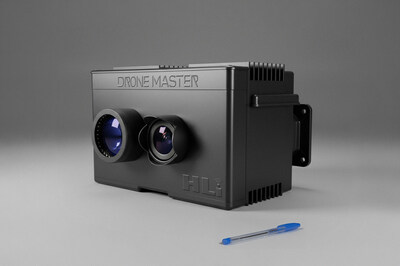
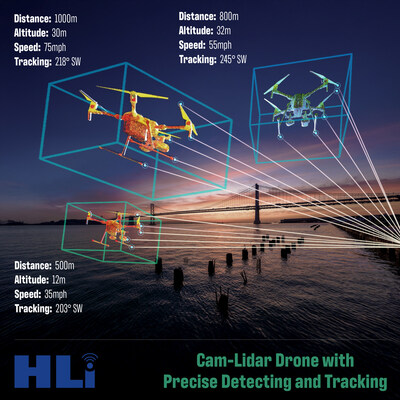
The system is designed for commercial and government drone-defence applications, including protection of critical infrastructure, airports, industrial facilities, borders, and large public venues. By fusing multiple sensing modalities, Cam-Lidar provides enhanced situational awareness and a significant performance advantage over traditional radar or optical-only systems.
Relevance to Aerospace and Defence
Cam-Lidar’s capabilities are particularly relevant to aerospace and defence stakeholders. The system addresses growing concerns around unmanned aerial systems in proximity to aircraft operations, airfields, launch sites, and other sensitive aerospace facilities. Its sensor-fusion architecture—combining lidar, optical imaging, and AI—demonstrates an emerging trend in aerospace situational-awareness technologies, where integrated, high-fidelity data streams are increasingly critical for safety and operational efficiency.
Beyond defence applications, Cam-Lidar offers aerospace facility managers and system integrators a tool to enhance airspace security, improve operational resilience, and mitigate risks from drones or other fast-moving objects. The technology could also influence the design of future aerospace sensor suites, guidance systems, and autonomous monitoring platforms.
Outlook and Industry Implications
As Cam-Lidar enters the market, aerospace manufacturers, defence contractors, and facility operators may consider integrating the system into their security and operational frameworks. Key considerations include how the technology can interface with existing sensor networks, the potential need for certification for aerospace and defence use, and the opportunities it creates for improved situational awareness in real-time operations. Cam-Lidar exemplifies a shift toward lidar-centric, AI-enabled solutions in aerospace safety and defence, offering both immediate applications and longer-term influence on sensor design and system architecture.
Hall Lidar Inc., founded by David S. Hall, is focused on advancing smart imaging and detection solutions across automotive, robotics, security, and aerospace-defence applications. The company leverages Hall’s experience in lidar innovation to deliver systems that combine precision sensing, real-time processing, and AI-driven decision-making for complex operational environments.

Related Posts