Vaughn College hosted its annual Gala on April 16, recognizing five leaders whose work continues…
Interlune Launches Lunar Regolith Simulant Center in Texas with $4.8M Grant
In a strategic move that could accelerate lunar resource development, Seattle-based Interlune has secured up to $4.84 million from the Texas Space Commission to establish a Lunar Regolith Simulant Center of Excellence near NASA’s Johnson Space Center in Houston. The initiative aims to advance high-fidelity lunar soil simulants, a critical component for testing technologies destined for the Moon.
Building the Groundwork for Lunar Operations
Unlike terrestrial soil, lunar regolith presents unique challenges due to its sharp, glassy particles and lack of moisture. These properties affect everything from rover mobility to excavation systems and dust mitigation strategies. Interlune’s new facility will focus on producing advanced simulants that replicate these characteristics with precision, enabling aerospace companies and government agencies to test equipment under realistic conditions.
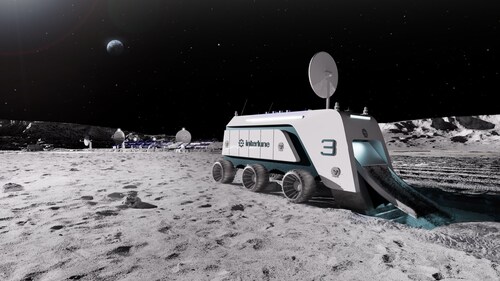
Rob Meyerson, Interlune cofounder and CEO, emphasized the broader impact of the project, stating that “a highest-fidelity testing environment on Earth is of tremendous value to Interlune and the entire lunar exploration community.” The company’s work is expected to support a wide range of lunar technologies, including landers, rovers, and resource extraction systems.
Helium-3 and the Promise of Lunar Resources
Interlune’s long-term vision centers on harvesting helium-3, a rare isotope on Earth but relatively abundant on the Moon. Helium-3 has garnered attention for its potential in clean fusion energy, as well as its current applications in quantum computing and national security. The company’s proprietary harvester is designed to be smaller, lighter, and more energy-efficient than existing concepts, reducing launch costs and operational complexity.
The quantum computing sector, in particular, has emerged as a key driver of helium-3 demand. Superconducting quantum computers require extreme cooling, often achieved through dilution refrigerators that rely on helium-3. With global supplies dwindling since the U.S. government flagged a shortage in 2010, lunar extraction offers a promising alternative.
Texas as a Hub for Lunar Innovation
The grant was awarded through the Space Exploration and Aeronautics Research Fund, a program designed to bolster Texas’s aerospace economy. Interlune’s new center is expected to create local jobs, expand infrastructure, and offer internship opportunities for students and early-career professionals. Dr. Elizabeth Frank, Interlune’s chief scientist, will lead the research efforts with a Texas-based team.
This development aligns with Texas’s growing role in space innovation. The state is already home to major NASA facilities and a burgeoning commercial space sector. By anchoring its regolith research in Houston, Interlune taps into a rich ecosystem of aerospace talent and institutional support.
Funding Momentum and Future Missions
Interlune has raised $18 million in venture capital and secured binding contracts for helium-3 delivery beginning in 2029. In addition to the Texas Space Commission grant, the company has received support from the Department of Energy, NASA, and the National Science Foundation. Several lunar missions are planned for this decade, positioning Interlune as a frontrunner in the race to commercialize space resources.
While the concept of mining the Moon may still evoke science fiction for some, Interlune’s methodical approach and strategic partnerships suggest a future where lunar materials play a tangible role in Earth-based industries. For aerospace stakeholders, the company’s progress offers a glimpse into the next phase of off-world infrastructure and resource logistics.
Why Simulants Matter
Lunar regolith simulants may sound niche, but they are foundational to the success of nearly every lunar mission. From validating wheel designs to testing ISRU (in-situ resource utilization) systems, these Earth-based analogs allow engineers to iterate safely and cost-effectively. Interlune’s investment in this space not only supports its own harvesting ambitions but also contributes to a shared testing environment that benefits the entire lunar development community.
As the aerospace industry pivots toward sustained lunar presence, initiatives like Interlune’s simulant center will be essential. They represent the quiet but critical groundwork that enables bold exploration goals to become operational realities.

Related Posts