Type One Ventures has advanced two members of its investment team into expanded leadership roles…
XTI Aerospace Advances TriFan 600 Program with Subscale Flight Milestones
XTI Aerospace has announced successful flight operations for its Sparrow and Kestrel subscale aircraft, marking a critical step in the company’s milestone-driven roadmap toward the full-scale TriFan 600 demonstrator. These achievements validate key aerodynamic and control system elements, reinforcing XTI’s disciplined approach to developing its hybrid vertical takeoff and landing (xVTOL) aircraft.
For aerospace engineers and investors tracking the evolution of regional VTOL platforms, this update signals tangible progress in a sector long dominated by conceptual renderings and speculative timelines.
Subscale Success: De-Risking the Path to Full-Scale Flight
The Sparrow and Kestrel prototypes, approximately 1:15 and 1:12 scale respectively, have undergone rigorous testing over the past six months. Flight operations confirmed stability, control logic, and aerodynamic performance across varied mission profiles. These results reduce technical risk and accelerate XTI’s timeline for the TriFan 600, a piloted, full-scale aircraft anticipated in 2027.
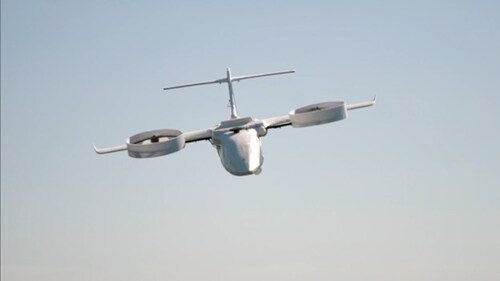
The next phase, TriHawk, will introduce a larger 1:8 scale model designed to deepen insights into VTOL dynamics and refine system models ahead of full-scale development.
TriFan 600: A New Category in Regional Air Mobility
XTI’s TriFan 600 aims to combine the vertical lift of a helicopter with the speed and range of a fixed-wing aircraft, targeting cruise speeds over 300 mph and a range of up to 1,000 miles. This hybrid capability positions the aircraft for business aviation, regional transport, and special-mission markets where point-to-point mobility is increasingly valued.
The subscale program reflects a classic aerospace engineering strategy: validate early, iterate often, and build confidence before committing to full-scale production. As Alex Williams, PhD, Senior Advisor to XTI, noted, “Subscale aircraft and models have been an important component of design validation throughout the history of aerospace engineering.”
Engineering Discipline and Capital Efficiency
CEO Scott Pomeroy emphasized the cost-effective nature of the subscale program, which allows XTI to test new technologies and flight dynamics without the expense and risk of full-scale prototypes. VP of Engineering Dave Ambrose added that the success of Sparrow and Kestrel confirms the viability of core design elements under real flight conditions.
This approach aligns with broader industry trends favoring modular development and capital discipline, especially in emerging VTOL markets where certification pathways remain complex and investor scrutiny is high.
Implications for Regional Aerospace Innovation
XTI’s progress offers a compelling case study in methodical innovation. The company’s emphasis on engineering transparency make it a potential collaborator for local suppliers, test facilities, and workforce development initiatives.
As the TriFan 600 moves closer to full-scale flight, XTI is not just building an aircraft, it’s building trust. In a sector often clouded by hype, the company’s milestone-driven strategy and subscale validation offer a refreshing model for how next-generation aircraft can be developed with rigor, realism, and regional relevance.

Related Posts