New Validation Capability Targets Commercial and Defense Timing Applications The Colorado Quantum Incubator in Boulder…
Yokogawa and Toyota Advance Lunar Rover Control Systems in Strategic R&D Pact
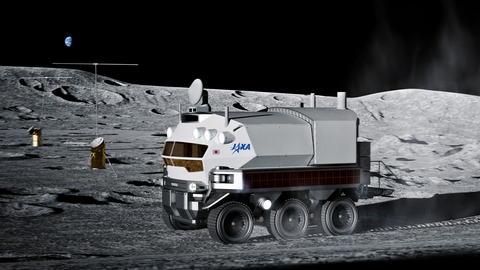
In a move that underscores Japan’s growing ambitions in space exploration, Yokogawa Electric Corporation has signed agreements with Toyota Motor Corporation to co-develop control and measurement systems for a manned pressurized lunar rover. The rover, nicknamed the “Lunar Cruiser,” is being developed in partnership with the Japan Aerospace Exploration Agency (JAXA) and is slated for launch in 2031 or later.
Engineering for the Moon: A New Frontier in Control Systems
The collaboration focuses on designing and prototyping a control platform and battery measurement components for the Lunar Cruiser, which will be Japan’s first standalone manned space system. The rover is expected to operate both with and without crew, enabling continuous exploration of the lunar surface. This dual-mode capability demands robust, autonomous control systems that can withstand extreme conditions and operate reliably over extended durations.
Yokogawa brings decades of experience in industrial automation and precision measurement to the table. Its technologies have proven resilient in harsh environments on Earth, from polar regions to deep-sea operations. The company now aims to adapt these systems for the rigors of lunar terrain, where temperature swings, radiation exposure, and communication latency pose unique challenges.
Strategic Implications for Aerospace and Automation
While Toyota’s involvement in lunar mobility has drawn attention for its crossover from automotive to aerospace, Yokogawa’s entry into space systems development signals a broader trend: the convergence of industrial automation and aerospace engineering. As lunar missions shift from proof-of-concept to sustained operations, the need for reliable control platforms becomes paramount.
Yokogawa’s participation also reflects its medium-term business strategy, “Growth for Sustainability 2028,” which identifies space as a key area for expansion. The company sees the Lunar Cruiser project not only as a technological milestone but as a proving ground for innovations that could enhance its terrestrial offerings in energy, chemicals, and advanced manufacturing.
Critical Control Systems
For aerospace professionals, the Yokogawa-Toyota partnership offers a glimpse into the future of lunar infrastructure. Control systems are often overshadowed by propulsion and mobility in space discourse, yet they are essential for mission success. As lunar exploration evolves toward permanence, the reliability and adaptability of control platforms will define the viability of surface operations.
Moreover, this collaboration exemplifies the growing role of cross-sector partnerships in space development. Automotive firms bring expertise in mobility and ruggedization, while industrial automation companies contribute precision and resilience. Together, they form a blueprint for how aerospace systems can be built with modularity, scalability, and long-term sustainability in mind.
From Prototypes to Lunar Deployment
The current agreements cover design and procurement for prototype development, advancing earlier conceptual studies. As the project matures, Yokogawa will continue refining its systems in preparation for integration and eventual deployment. The technologies developed for the Lunar Cruiser may also find applications in Earth-based industries, enhancing product reliability and operational efficiency.
With launch targeted for the next decade, the Lunar Cruiser project is still in its early phases. Yet the pace and ambition of the R&D effort suggest that Japan is serious about establishing a sustained presence on the Moon. For aerospace stakeholders tracking lunar infrastructure, Yokogawa’s control systems may soon become a critical piece of the puzzle.

Related Posts