Vaughn College hosted its annual Gala on April 16, recognizing five leaders whose work continues…
Ribbit Leverages Parasoft’s AI-Driven Testing to Advance Autonomous Flight Safety
Ribbit, a Canadian startup developing autonomous aircraft systems for cargo delivery, has partnered with Parasoft to integrate AI-powered software testing into its safety-critical autopilot development. The collaboration supports Ribbit’s “software-first” strategy, which retrofits existing aircraft with autonomous capabilities rather than building new platforms from scratch.
This approach allows Ribbit to accelerate development cycles while maintaining rigorous safety standards, a balance increasingly sought across the aerospace sector.
Retrofitting Autonomy with Safety at the Core
Ribbit’s autonomy stack, written in C++, is designed for maximum control and reliability in unmanned operations. To validate its systems, the company uses Parasoft’s C/C++test and C/C++test CT tools, which support continuous integration workflows and enforce compliance with aviation coding standards such as MISRA and JSF.
By embedding Parasoft’s static analysis and test automation into its CI pipelines, Ribbit has achieved up to 95% test coverage and full compliance with safety-critical standards. This has proven instrumental in securing multiple government contracts exceeding $1 million for defense and humanitarian missions.
A “Proven-With-Use” Strategy for Certification
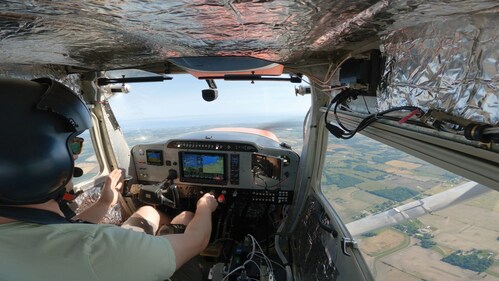
Rather than relying solely on simulation, Ribbit employs a pragmatic “proven-with-use” methodology. The company begins with onboard safety pilots, then transitions to remotely supervised flights under Canada’s Special Flight Operating Certificate (SFOC) framework. This stepwise validation process enables real-world data collection while maintaining regulatory flexibility.
Transport Canada has recognized Ribbit’s Parasoft-verified development practices as evidence of rigorous engineering, even prior to formal certification. This endorsement highlights the growing role of software assurance in regulatory approval for autonomous systems.
Implications for Aerospace Software Development
As autonomous technologies gain traction in both commercial and defense aviation, the need for scalable, certifiable software development practices is paramount. Parasoft’s integration into Ribbit’s workflow demonstrates how small teams can meet high-assurance requirements without compromising agility.
The use of AI-powered violation triaging and real-time issue detection within VS Code allows engineers to prioritize critical fixes and maintain code quality across fast-paced development cycles. This is particularly valuable for startups navigating complex regulatory landscapes with limited resources.
A Model for Scalable Innovation
Ribbit’s success underscores a broader shift in aerospace innovation: software-defined systems are enabling new capabilities without the overhead of traditional aircraft development. By focusing on modular retrofits and verified software, companies like Ribbit are expanding access to autonomous flight while reducing cost and complexity.
For aerospace professionals, this collaboration offers a compelling example of how AI-driven testing and compliance automation can accelerate certification and deployment in safety-critical domains.

Related Posts