Vaughn College hosted its annual Gala on April 16, recognizing five leaders whose work continues…
Skeyeon Transitions Leadership Following the Passing of Founder Ron Reedy
Skeyeon, a California-based developer of Very Low Earth Orbit (VLEO) satellite systems, announced the passing of its founder and CEO, Dr. Ronald E. Reedy. A respected figure in both semiconductor and space systems innovation, Reedy leaves behind a legacy of technical rigor and imaginative engineering that helped shape the future of orbital platforms.
A Legacy Bridging RF Innovation and Orbital Architecture
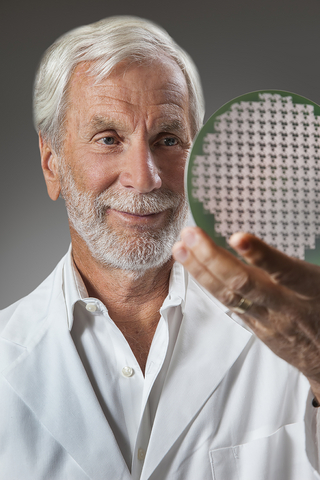
Dr. Reedy’s career spanned decades of impact, beginning with his pioneering work in RF SOI/UltraCMOS® technology at Peregrine Semiconductor, now pSemi. His transition into space systems marked a bold pivot, culminating in Skeyeon’s development of compact, high-performance satellites designed for VLEO operations. These platforms aim to deliver high-revisit, high-data-rate capabilities for defense and commercial customers, a growing priority as aerospace stakeholders seek alternatives to traditional LEO constellations.
Reedy’s academic pedigree, including degrees from the U.S. Naval Academy, Naval Postgraduate School, and UC San Diego, reflected a lifelong commitment to precision and applied physics. His influence extended beyond technical contributions, shaping Skeyeon’s culture around clarity, resilience, and the pursuit of what he once called “inevitable innovation.”
Strategic Continuity Through Seasoned Leadership
To carry forward Reedy’s vision, Skeyeon has appointed Mike Knowles as Executive Officer and Rob Weitendorf as Operations Officer. Both have served on the company’s advisory board and were closely involved in succession planning.
Knowles brings more than 30 years of aerospace and defense leadership, including executive roles at Cubic, Curtiss-Wright, Collins Aerospace, and Lockheed Martin. His background in C5ISR systems and operational strategy positions him to scale Skeyeon’s roadmap with an eye toward mission integration and customer readiness.
Weitendorf, a veteran of satellite communications, co-founded Lepton Global Solutions and later led government and military sales at Kymeta. His experience in SATCOM solutions for agencies like SOCOM underscores Skeyeon’s potential relevance in tactical and secure communications, especially as VLEO platforms gain traction for low-latency, high-fidelity data delivery.
VLEO’s Rising Role in Aerospace Strategy
Skeyeon’s focus on VLEO architecture aligns with broader aerospace trends favoring orbital agility, reduced latency, and enhanced revisit rates. Unlike traditional LEO systems, VLEO satellites operate at altitudes below 400 kilometers, offering sharper imaging and faster data cycles. However, they also face challenges in atmospheric drag and thermal management, areas where Skeyeon’s work in coatings and materials may offer competitive advantages.
Recent studies from the Aerospace Corporation and DARPA have highlighted VLEO’s potential for persistent surveillance, rapid-response imaging, and secure communications. Skeyeon’s modular design and emphasis on resilient downlink architectures suggest a readiness to contribute meaningfully to these emerging use cases.
From Lab to Orbit
In statements following the transition, Knowles and Weitendorf emphasized their commitment to scaling Skeyeon’s programs from concept to deployment. The company’s technical foundation, shaped by Reedy’s mentorship and cross-disciplinary expertise, positions it to serve both defense and commercial sectors seeking nimble, high-performance orbital solutions.
As the aerospace industry continues to explore the tactical and scientific promise of VLEO, Skeyeon’s next chapter will be defined by its ability to translate innovation into operational impact. With new leadership and a durable technical base, the company remains one to watch in the evolving landscape of orbital systems.

Related Posts