
New Validation Capability Targets Commercial and Defense Timing Applications The Colorado Quantum Incubator in Boulder…

Stanford Advanced Materials Expands Crystal Portfolio to Power Next-Gen Photonics and Laser Research
Stanford Advanced Materials (SAM), a longtime supplier of high-performance materials for aerospace and technology sectors, has announced the release of five new optical and nonlinear crystals aimed at advancing photonics, laser R&D, and precision optical systems. The additions, PPLN, MGLN, BIBO, CaF₂, and PPKTP, reflect SAM’s continued investment in enabling scalable, high-efficiency solutions for researchers and manufacturers working at the frontier of light-based technologies.
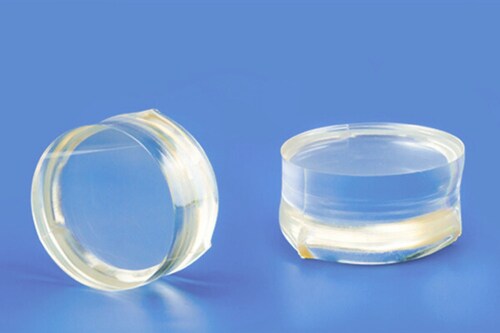
Crystal Innovation for Aerospace-Grade Photonics
Each crystal in the new series offers distinct advantages for aerospace and defense applications, particularly in areas such as quantum optics, frequency conversion, and high-power laser systems:
- PPLN (Periodically Poled Lithium Niobate): Known for its high nonlinear coefficient and broad transparency range (350–5200 nm), PPLN supports second-harmonic generation (SHG), optical parametric oscillation (OPO), and quantum optics experiments. Its compact form factor and quasi-phase-matching structures make it ideal for space-constrained systems.
- MGLN (Magnesium-Doped Lithium Niobate): With a high optical damage threshold and low absorption loss, MGLN is well-suited for telecommunications, high-power lasers, and nonlinear optical devices operating at room temperature.
- BIBO (Bismuth Borate): Offering a nonlinear coefficient up to 8× higher than KDP, BIBO excels in frequency conversion within the visible and blue spectrum. Its high damage threshold supports robust performance in SHG and optical parametric amplifiers.
- CaF₂ (Calcium Fluoride): A staple in aerospace optics, CaF₂ provides broad transmission from UV to IR with low dispersion and high clarity. It’s commonly used in lenses, windows, and spectroscopic systems requiring high-resolution imaging.
- PPKTP (Periodically Poled Potassium Titanyl Phosphate): With a nonlinear coefficient three times higher than standard KTP, PPKTP is a go-to for entangled photon generation and SHG across a wide transparency range.
Why This Matters for Aerospace Stakeholders
As aerospace systems increasingly rely on photonics for sensing, communications, and directed energy, the availability of customizable, high-performance crystals becomes mission-critical. SAM’s expanded portfolio supports both experimental setups and production-grade systems, offering materials that can withstand harsh environments while delivering precise optical behavior.
For aerospace R&D teams, these crystals open doors to more compact, efficient, and tunable laser architectures. Whether enabling quantum key distribution from satellites or enhancing lidar systems for autonomous flight, the materials announced by SAM are foundational to the next wave of aerospace innovation.
Founded in 1994 and headquartered in Santa Ana, California, SAM supplies over 7,000 advanced materials globally, serving aerospace, medical, and industrial markets with a focus on reliability and technical excellence.

Related Posts