New Validation Capability Targets Commercial and Defense Timing Applications The Colorado Quantum Incubator in Boulder…
Merlin Establishes Hanscom Field as New Flight Test Hub for AI-Driven Aviation
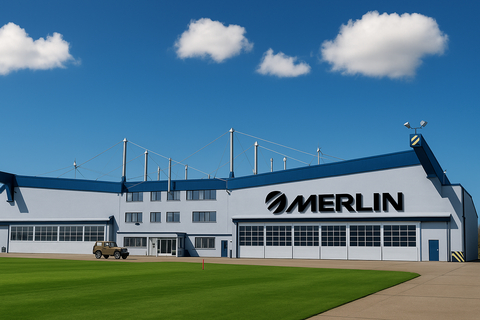
Merlin, a Boston-based developer of autonomous flight technology, has announced the opening of a new flight test center at Hanscom Field in Massachusetts. The facility will serve as a proving ground for Merlin’s AI co-pilot system, which is designed to assist human pilots and eventually enable fully autonomous operations in complex airspace.
The move positions Merlin at the intersection of artificial intelligence, aviation safety, and national defense, with Hanscom Field offering proximity to key aerospace stakeholders including MIT Lincoln Laboratory and the U.S. Air Force’s innovation ecosystem.
Accelerating AI Integration in Cockpits
Merlin’s AI co-pilot is built to handle a range of flight tasks, from radio communications and navigation to emergency procedures. Unlike fully autonomous drones, the system is designed to work alongside human pilots, augmenting decision-making and reducing workload. The company has already conducted over 800 test flights across multiple states, and the new Hanscom facility will allow for expanded testing in controlled and congested airspace.
The FAA has granted Merlin a special airworthiness certificate for its modified aircraft, enabling real-world trials of its AI stack. These flights will focus on validating the system’s ability to interpret air traffic control instructions, respond to dynamic conditions, and maintain situational awareness, capabilities that are essential for integration into commercial and military aviation.
Strategic Location with Aerospace Synergy
Hanscom Field’s proximity to Boston’s tech corridor and defense research institutions makes it an ideal location for Merlin’s next phase of development. The site is adjacent to Hanscom Air Force Base, which hosts the Air Force Life Cycle Management Center and other key acquisition and R&D units. This geographic alignment could facilitate future collaborations on autonomous systems for defense applications, including cargo transport and ISR (intelligence, surveillance, reconnaissance) missions.
Merlin’s CEO Matthew George emphasized the importance of location in accelerating innovation: “Hanscom Field offers a unique blend of operational complexity and strategic access. It’s the perfect environment to refine and validate our AI co-pilot technology.”
Implications for Aerospace Stakeholders
As the aerospace industry grapples with pilot shortages, rising operational costs, and increasing airspace congestion, AI-assisted flight systems are gaining traction. Merlin’s approach, augmenting rather than replacing human pilots, aligns with current regulatory and operational realities, offering a pathway to safer, more efficient flight without requiring a complete overhaul of cockpit protocols.
For aerospace engineers, program managers, and regulators, Merlin’s work at Hanscom Field offers a glimpse into the future of crewed and uncrewed flight. The company’s emphasis on real-world testing, regulatory engagement, and defense alignment suggests a pragmatic roadmap for AI integration that could influence both commercial aviation and military logistics.
Looking Ahead
With Hanscom Field now operational as a flight test hub, Merlin is set to accelerate its development timeline and deepen its engagement with federal and commercial partners. As AI continues to reshape aviation, Merlin’s co-pilot system may serve as a bridge between today’s crewed aircraft and tomorrow’s autonomous fleets.

Related Posts