
New Validation Capability Targets Commercial and Defense Timing Applications The Colorado Quantum Incubator in Boulder…
Cummings Aerospace Demonstrates Long-Range 3D-Printed Loitering Munition, Hellhound S3
Cummings Aerospace, a U.S. defense and aerospace engineering firm, recently announced a successful flight test of its Hellhound S3 loitering munition, showing that the man-portable system can exceed 60 km in range under certain conditions. The test reinforces the potential of additive manufacturing and modular design in advancing tactical drones for strike or Counter-UAS (C-UAS) roles.
Test Results and Performance Highlights
In the most recent trial, conducted September 18, 2025 at the Pendleton UAS Range in Oregon, Hellhound S3 was launched from a vertical canister, transitioned to cruising flight, and loitered over a target area. The system covered more than 30 km with an inert warhead before returning, landing with over 50 percent fuel remaining, indicating margin for further range extension.
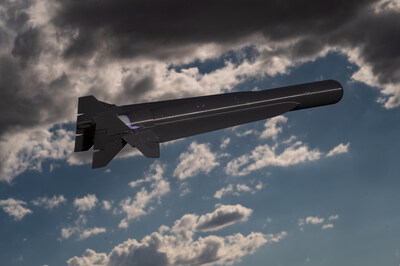
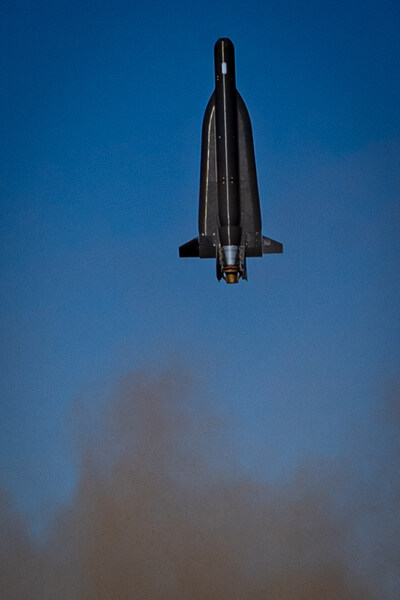
During the flight, the vehicle operated at approximately 80 m/s (≈180 mph). The test objectives, launch, transition, loiter, and recovery, were successfully met.
Key performance attributes include:
- Modular, open-architecture design, allowing rapid reconfiguration of payloads (e.g. warhead, EW, ISR) by field operators
- Lightweight, manportable system: the entire weapon package, including launch canister and ground control, weighs under 25 lb, enabling one-soldier deployment
- Additive manufacturing (3D printing) in structure and subsystem fabrication, enabling rapid iteration, reduced cost, and flexibility in design refinements
- Achieved TRL-7 and MRL-7 status, indicating readiness for further operational demonstration and transition toward production
Relevance to Aerospace & Defense Systems
Although Hellhound S3 is not an aircraft in the commercial aviation sense, its design and demonstration offer insight into emerging trends relevant to aerospace systems:
- Rapid prototyping via additive manufacturing: The use of 3D printing for aerodynamic and structural parts showcases how new manufacturing methods can compress design cycles, particularly for mission-tailored systems.
- Edge computing and modular payloads: Loitering munitions increasingly incorporate payload switching, sensor integration, and autonomy. The modular architecture of Hellhound aligns with principles of open systems and upgradeable sensor suites that echo UAV and aerospace systems.
- Lightweight systems for distributed deployment: The system’s low mass and portability reflect the emphasis on miniaturization and SWaP efficiency, priorities shared by many UAV and sensor programs.
- Incremental maturation path: With TRL-7 and MRL-7 achieved, Hellhound’s development path may interface with integrated system testbeds, doctrine validation, and possible pairing with larger platforms or as swarm assets.
- Counter-UAS and strike convergence: The ability to shift between ISR, strike, and defense against unmanned threats is a cross-domain capability convergence increasingly attractive for both air and ground operations.
Challenges, Risks, and Considerations
While the test marks a promising milestone, several technical and programmatic hurdles remain:
- Operational robustness and environment: The system must prove durability under diverse weather, temperature, vibration, and EMI/EMC stresses in real mission environments.
- Autonomy, targeting, and mission software: The efficacy of automatic target recognition, guidance, and control software will influence operational effectiveness and integration with higher echelon systems.
- Integration of sensors and EW payloads: Balancing payload weight, power, and data bandwidth constraints will challenge system designers as mission complexity grows.
- Certification and safety: For deployment in military airspace, interfaces with de-confliction systems, air traffic control, and flight safety regulations may be required, or at least negotiated.
- Production scaling and cost control: Transitioning from prototype to volume manufacturing while maintaining cost advantages and quality will be essential for adoption.
- Interoperability and logistics: Field support, spare parts, maintenance, and upgrades must be addressed to make the system sustainable in operational units.
Outlook
Hellhound S3’s extended range demonstration pushes the envelope for small, portable loitering munitions. As the system moves forward, Cummings Aerospace plans further flight tests, additional mission demonstrations (especially in hunter-killer operational modes), and engagement with U.S. Army and DoD stakeholders.
For aerospace and defense integrators, this development suggests potential for scalable, reconfigurable, rapidly iterated unmanned systems that can operate at the edge. The innovation in manufacturing, modularity, and performance margins in Hellhound may serve as a reference point for future UAV, missile, or expendable sensor designs.

Related Posts