New Validation Capability Targets Commercial and Defense Timing Applications The Colorado Quantum Incubator in Boulder…

Electra Selects Evolito to Provide Electric Propulsion for EL9 Ultra-Short Hybrid Aircraft
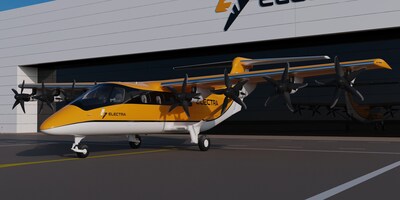
Electra.aero has announced that it has selected Evolito, a developer of electric propulsion systems, to supply the electric propulsion units (EPUs) for its EL9 ultra-short takeoff hybrid-electric aircraft. The move supports Electra’s goal of achieving a 150 ft (≈ 45 m) takeoff and landing capability via blown-lift technology.
Program Background & Technical Role
The EL9’s propulsion architecture employs eight Evolito EPUs arranged along the leading edge of the wing to generate blown lift over the wing and flaps, thereby enhancing lift at low speeds and enabling ultra-short runway performance. Electra positions this as a core enabler of its “Direct Aviation” concept, connecting more locations with fewer infrastructure constraints.
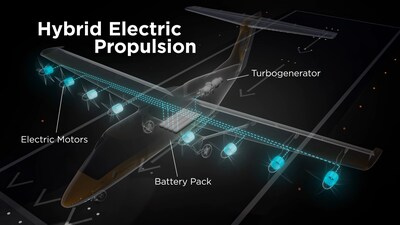
The EPUs by Evolito integrate lightweight motors, motor controllers, and thermal management to meet aerospace reliability and efficiency requirements. Their mission is to enable distributed electric propulsion and blown lift without compromising weight or integration complexity.
Performance Claims & Development Milestones
Electra notes that aerodynamic testing of the blown-wing design has achieved lift coefficients exceeding 20, approximately seven times higher than typical unblown wings. This margin supports the EL9’s low takeoff speeds and short landing roll.
Electra plans first flight tests in 2027, targeting certification and entry into service by late 2029 or into 2030 under FAA Part 23 rules. The EL9 already reportedly has over 2,200 preorders from more than 60 commercial and helicopter operator customers.
Implications for Aerospace & Electrified Mobility
For the aerospace sector, this announcement underscores several evolving trends:
- Blown-lift + distributed propulsion synergy: The pairing of blown-wing lift augmentation with multiple EPUs is gaining traction as a method to reduce runway requirement while keeping wing loading moderate. Electra’s approach is among the more advanced candidacies in this domain.
- Integration of EPUs into airframe lifting surfaces: Embedding the propulsion units directly into the wing leading edge amplifies the demands on structural, thermal, acoustic, and airflow integration, making the EPU supplier’s role critical beyond just motor performance.
- Certification pressure & systems maturity: As with many hybrid-electric and eVTOL programs, success will depend heavily on achieving certification-compliant reliability, durability, safety margins, redundancy, and maintainability in real operational environments.
- Market traction and supply chain scaling: The ability of Evolito and its constituency (motors, controllers, cooling systems, power electronics) to scale reliably for production volumes is a key risk factor in the transition from demonstrator to fleet.
- Ecosystem alignment: The selection supports Electra’s push toward Direct Aviation as a business model. If the EL9 achieves reliable operations, it could influence standards and expectations for hybrid-electric regional aircraft platforms.
Risks, Challenges & Forward View
While promising, several challenges and uncertainties lie ahead:
- Thermal and power management: Distributing power across eight EPUs demands careful balance of cooling, redundancy, and electrical distribution, especially under continuous or transient load.
- Structural and aero integration tradeoffs: Blown-lift systems are sensitive to flow separation, flap interactions, and wing contouring. The EPUs must not degrade aerodynamic performance or introduce unacceptable interference.
- Reliability, maintenance, and lifecycle cost: The durability of propulsion components in repeated mission cycles, as well as maintenance logistics, will be closely scrutinized by future operators.
- Certification path and regulatory alignment: Achieving FAA (and equivalent international) certification for novel propulsion and lift systems involves negotiation with regulators, risk demonstration, and possibly evolving standards.
- Schedule & funding risk: Slippage in EPU development or integration could delay flight test and certification timelines, which in turn could affect customer confidence and order fulfillment.
Outlook
This commitment by Electra to Evolito as EPU supplier is a milestone toward realizing the EL9’s unique performance envelope. If the EPUs deliver the required power, reliability, and integration compatibility, they could become a model reference for future hybrid-electric regional and ultra-short takeoff aircraft.
For industry observers and participants in the propulsion, power electronics, and hybrid aircraft ecosystem, this announcement merits attention, not only for its technical ambition, but for how it may help shape expectations for coupling aerodynamic innovation with electrical propulsion in next-generation aircraft.

Related Posts