New Validation Capability Targets Commercial and Defense Timing Applications The Colorado Quantum Incubator in Boulder…

Merlin and GE Aerospace Partner to Deliver Scalable Autonomy for Future Flight
GE Aerospace and Merlin have announced a new collaboration to develop the Autonomy Core, a modular software framework designed to enable autonomous flight across a range of commercial and defense platforms. The initiative aims to integrate Merlin’s proven autonomy stack into GE’s flight management systems, creating a certifiable, scalable solution for next-generation aircraft operations.
A Modular Brain for Autonomous Aviation
The Autonomy Core is envisioned as a central processing layer for autonomous decision-making, capable of adapting to diverse mission profiles and airframes. Merlin’s software, which has already demonstrated success in Department of Defense programs and FAA-certifiable aircraft, will be embedded within GE Aerospace’s flight control architecture. This pairing offers a pathway to autonomy that prioritizes safety, interoperability, and regulatory alignment.
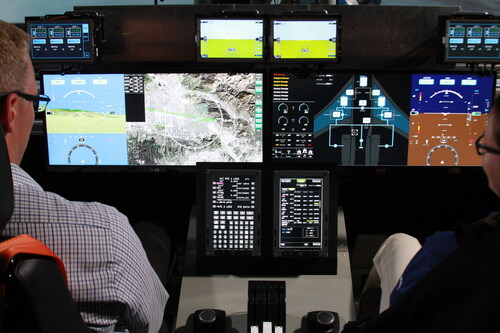
For aerospace developers and operators, the promise of a certifiable autonomy core is significant. It could streamline integration across cargo, ISR, and passenger platforms while reducing the complexity of bespoke autonomy solutions.
Industry Context: Autonomy Moves from Concept to Capability
The aerospace sector is increasingly turning to autonomy to address pilot shortages, optimize mission execution, and expand operational reach. While many efforts remain in the prototype phase, GE Aerospace and Merlin’s initiative reflects a shift toward deployable, standards-based systems that can scale across fleets.
This collaboration also aligns with broader trends in digital aviation, where software-defined capabilities are reshaping everything from maintenance to airspace management. By focusing on modularity and certification, the Autonomy Core could become a foundational element in future aircraft design.
As autonomy becomes a strategic priority for both commercial and defense aviation, partnerships like this one will play a key role in shaping the technical and operational landscape. GE Aerospace and Merlin’s combined expertise positions them to influence not just how autonomous systems are built, but how they are trusted, certified, and deployed at scale.
A Strategic Pairing: Legacy Prime Meets Fast-Rising Autonomy Innovator
Beyond the technical ambition of the Autonomy Core, the partnership between GE Aerospace and Merlin reflects a broader industry shift, one where established aerospace primes are teaming up with agile, AI-driven startups to accelerate innovation. Merlin, which plans to go public in 2026 via a business combination with Inflection Point Acquisition Corp, has rapidly positioned itself as a leading defense prime contractor for autonomy in aviation.
This collaboration exemplifies how legacy systems integrators and emerging tech firms can jointly shape the future of flight. GE Aerospace brings decades of experience in certifiable avionics and global integration, while Merlin contributes a nimble development model and proven autonomy stack already deployed in defense programs. Together, they are not just building software, they are laying the groundwork for scalable, certifiable autonomy across both military and civil aviation.
As the aerospace sector navigates the transition to intelligent, pilot-optional platforms, partnerships like this one offer a blueprint for how legacy and next-gen players can co-create the future, bridging institutional depth with startup velocity.
Merlin’s Momentum: A Partner of Choice in Autonomous Aviation
The Autonomy Core initiative with GE Aerospace is just one example of Merlin’s accelerating influence in the aerospace autonomy landscape. Earlier this year, Merlin announced a strategic partnership with Northrop Grumman to advance autonomous mission capabilities using the Model 437 Vanguard aircraft, built by Scaled Composites. That program aims to integrate Merlin’s autonomy stack into a high-performance platform designed for next-generation defense applications.
Together, these collaborations underscore Merlin’s emergence as a preferred partner for legacy primes seeking to embed autonomy into both existing and future airframes. With plans to go public in 2026 via a SPAC merger with Inflection Point Acquisition Corp, Merlin is positioning itself not just as a technology provider, but as a systems-level integrator capable of shaping the future of flight.
For aerospace stakeholders, Merlin’s trajectory offers a compelling case study in how nimble, software-first companies can complement, and accelerate, the innovation cycles of established OEMs. Whether in defense, logistics, or commercial aviation, autonomy is becoming a shared priority, and Merlin is increasingly at the center of that conversation.

Related Posts