
New Validation Capability Targets Commercial and Defense Timing Applications The Colorado Quantum Incubator in Boulder…

Teledyne Microwave UK Unveils Wideband Limiter for Next‑Generation Radar and EW Protection
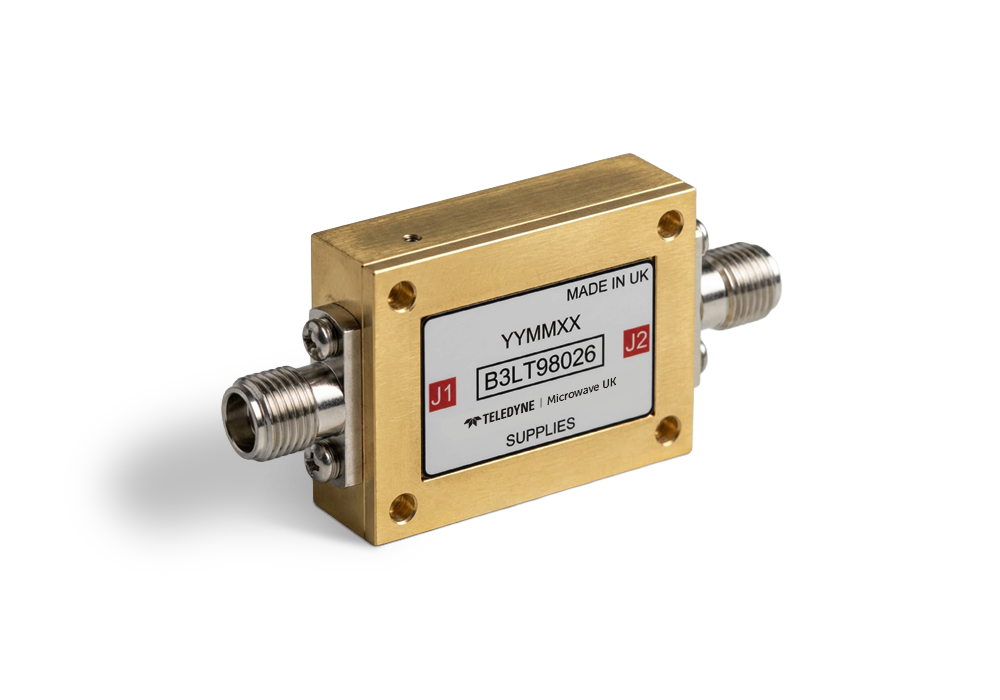
Teledyne Microwave UK has introduced a new wideband RF limiter designed to harden radar electronic support measures and broader electronic warfare systems against increasingly powerful and complex electromagnetic threats. The passive module covers 0.1 to 20 GHz and is engineered to protect sensitive front‑end receivers without degrading system sensitivity, a requirement that is becoming more critical as high‑power RF and directed energy weapon activity expands across modern battlespaces.
Protection Designed for Evolving Threat Environments
The limiter is built to absorb and restrict harmful RF energy before it reaches mission‑critical electronics. According to the release, this capability helps reduce the likelihood of damage to high‑value components, lowers repair frequency, and minimizes downtime following high‑power exposure events. These factors are central to maintaining operational readiness for platforms that must remain online in contested electromagnetic environments.
Although R‑ESM systems are inherently passive, the company notes that future threat evolution is placing greater demands on receiver resilience. The limiter is positioned as a strategic safeguard that provides continuous protection while preserving wideband coverage and low insertion impact.
Integration and System Architecture Considerations
The module is housed in a compact SMA‑based package that allows straightforward integration into existing system architectures. It is compatible with Teledyne’s Phobos Mast Top Unit and can incorporate additional RF elements such as filters when required. This approach supports system designers seeking to enhance survivability without undertaking major hardware redesigns.
Teledyne highlights that the limiter’s passive architecture enables protection without altering system behavior, ensuring that EW and intelligence platforms retain their performance characteristics while gaining additional resilience.
Relevance to Modern EW and Radar Programs
As global defense programs invest in next‑generation radar, EW, and intelligence systems, front‑end protection technologies are becoming a higher priority. The rise of high‑power RF sources, intentional interference, and emerging directed energy systems has increased the need for robust, wideband limiters that can operate across broad frequency ranges.
The new module is positioned to support a wide spectrum of platforms, including airborne, naval, and ground‑based systems that must operate in dense and dynamic electromagnetic environments.
Industry Perspective
John Toner, Senior Vice President and General Manager of Teledyne Aerospace and Defense Electronics UK, emphasized the importance of resilient front‑end protection as threat environments evolve. He noted that the limiter provides the wideband coverage, low insertion impact, and compact form factor required to keep systems mission ready in the face of increasingly sophisticated RF and directed energy challenges.
Availability
The Wideband Limiter is now available for integration evaluation across defense and electronic warfare applications. Technical specifications and product details are available through Teledyne Microwave UK’s sales channels.
About Teledyne Microwave UK
Teledyne Microwave UK provides advanced RF and microwave detection and protection technologies for defense and security customers worldwide. The company is part of the Teledyne Aerospace and Defense Electronics segment and supports mission‑critical applications across radar, EW, and related domains.

Related Posts